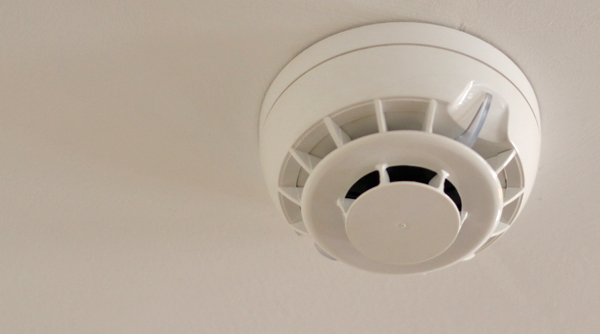
Fire alarms are one of the most important safety systems in any home. The right setup can give you early warning, help protect your family, and reduce damage if a fire does occur.
The good news is that there isn’t just one option. Some homes only need a straightforward solution, while others benefit from something more connected or more sophisticated. The right choice depends on your property, your layout, and the level of reassurance you want.
Take our quick Fire Safety Quiz to assess your risk.
At Spy Alarms, our job is to make that decision easier. We’re here to give clear, practical advice and help you choose what’s best for your home - not simply sell you the most complex system.
Residential fires remain a serious concern in the UK
According to gov.uk, in the 12 months leading up to March 2025, UK’s Fire and Rescue Services attended more than 140,000 fires across England, which is a 14% increase from the previous year. These figures highlight that despite improved prevention efforts, fire remains a real risk, and effective detection systems can make a life-saving difference.
The 3 main types of residential fire alarm system
For most homes, fire alarm options fall into three broad categories. Here’s what each one offers, along with the main pros and cons.
| System type | Best for | What to know |
| 1. Stand-alone detectors | Smaller homes, basic compliance, lower budgets | These are individual smoke or heat detectors that sound locally when activated. They are the cheapest and simplest option, but they mainly just make a noise nearby and offer the minimum level of protection. |
| 2. Fire detection linked to an intruder alarm | Homes wanting app alerts, extra convenience, or monitoring options | This approach connects fire detection to your intruder alarm system, so you can receive an audible alert in the property, app notifications, and in some cases monitoring support. It gives a stronger all-round solution without moving to a full commercial-style fire panel. |
| 3. Full panel-based fire system | Larger homes, more complex layouts, listed properties, higher-risk homes | A panel-based system is generally what you would expect in commercial settings, but it can also be a very sensible choice in larger or more complex homes. It gives greater control, broader coverage options, and a more structured system design. |
1. Stand-alone detectors
Stand-alone detectors are the entry-level option. They are cost-effective, quick to install and suitable where you simply need basic local warning in key parts of the home.
Pros: lower cost, straightforward installation, simple solution for basic coverage.
Cons: limited functionality, no wider system control, and they may only alert people who are close enough to hear them.
2. Fire detection connected to an intruder alarm system
This is often a very attractive middle ground for modern homes. When fire detection is connected to an intruder alarm, the system can give a strong audible warning, send app notifications and, where required, be connected to monitoring for added reassurance.
Pros: better visibility and control, app alerts when you are away, and the option for monitoring support.
Cons: more expensive than stand-alone detectors and not always the right fit if the property needs a dedicated fire system.
3. Full panel-based fire system
A full panel-based fire alarm system is the most comprehensive option. It is commonly used in commercial buildings, but it can also be worth considering in larger homes, unusual layouts, listed properties, or homes with specific risks where a more robust design is appropriate.
Pros: high level of control, tailored design, broader coverage options, and a strong solution for more demanding properties.
Cons: typically the highest-cost option and usually more than a standard home needs unless there is a clear reason for it.
Smoke alarms, heat detectors and system design
Whatever type of system you choose, the detectors themselves still matter. Smoke alarms are typically used in circulation spaces and living areas, while heat detectors are often better suited to kitchens and utility areas where normal activity might otherwise cause false alarms.
There are also different sensing technologies. Photoelectric detectors are generally better at detecting slow, smouldering fires. Ionisation detectors respond more quickly to fast-flame fires. In some cases, combined detection can provide broader coverage.
Wired, wireless and hybrid options
Systems can be wired, wireless, or a mixture of both. Wired systems are usually very reliable and can be cost-effective where cabling is practical. Wireless fire systems are often easier to retrofit and can reduce disruption during installation, although they may cost more. Hybrid systems can work well where part of the property is easy to cable and part is not.
How to choose the right setup for your home
The best fire alarm system is the one that fits your home properly. That means looking at the layout, where the higher-risk areas are, who lives there, and how much reassurance you want from the system.
Property size and layout: larger homes and multi-storey properties often benefit from interlinked or more advanced systems.
Higher-risk rooms: kitchens, boiler rooms, utility spaces and other risk areas may need heat detection or a more tailored design.
Occupants: households with children, older residents or vulnerable occupants may benefit from enhanced warning arrangements.
Lifestyle: if you spend time away from home or want extra peace of mind, app-connected or monitored solutions may be worth considering.
A professional survey is often the easiest way to get this right. Our experts can assess the property and explain the options in plain English, so you can make an informed decision with confidence.

Budget and long-term value
Cost matters, but it is important to think beyond the purchase price alone. A cheaper solution may be right for some homes, while others benefit from spending a little more for better coverage, easier management, or alarm monitoring support.
It is also worth factoring in alarm maintenance. Like any life-safety system, fire alarms should be tested, looked after and replaced when needed. The right advice at the start can help you avoid false economy later.
Standards, compliance and peace of mind
Domestic fire alarm design should follow recognised good practice, including the appropriate British Standards for the property type and risk, alongside the reassurance that comes from working with a BAFE-certified specialist. In some homes this is straightforward. In others, especially where there are unusual layouts, heritage considerations or higher-risk areas, expert guidance becomes even more important.
Spy Alarms is a fully BAFE-certified fire safety specialist, so homeowners can take advice from experienced professionals who understand how to recommend the right solution for the property, the level of risk and the way the home is used. A properly designed system is not just about compliance - it is about knowing your home has the right level of protection.
Are smoke alarms legally required?
In the UK, smoke alarms are required in certain settings, including rental properties and relevant new-build homes. For owner-occupied homes, the legal position may be different, but having effective fire detection is still strongly recommended and may be relevant to safety expectations and insurance considerations.
If you are unsure what applies to your home, we can talk you through it and explain the practical implications clearly.
Testing, cleaning and maintenance
Even the best system needs regular attention. A fire alarm that is not tested or maintained properly may not perform as expected when it matters most.
- Test alarms regularly using the test button.
- Replace batteries where required, or choose sealed-for-life devices where appropriate.
- Replace detectors when they reach the end of their service life, often around 10 years.
- Keep sensors clean and follow the manufacturer guidance for routine care.
- Have more advanced systems inspected and serviced professionally.
How Spy Alarms can help
Choosing a fire alarm system for your home should not feel confusing or pressured. Our role is to help you understand the options, explain what is genuinely suitable for your home, and recommend a solution that balances safety, practicality and budget.
We can help with simple detector upgrades, app-connected systems linked to intruder alarms, and more advanced panel-based fire systems where the property calls for them. We can also advise on monitoring, maintenance and future-proofing.
If you are not sure what level of system you need, that is exactly where our experts add value. We are here to help and advise on what is best for you.